

If you’ve scrolled through fitness content in the last few years, you’ve probably seen the 12-3-30 workout. It’s a simple treadmill walking routine that people say helps with fat loss, stamina and heart health, without the joint pounding of running.
What Is the 12-3-30 Workout?
The name is the formula:
- 12: set the treadmill incline to 12%
- 3: set the speed to 3 miles per hour (about 4.8 km/h)
- 30: walk for 30 minutes
That’s the whole workout. It was popularised by social media creator Lauren Giraldo, who shared it online and watched it spread across TikTok and Instagram. Its appeal is that you don’t need a plan, equipment beyond a treadmill, or any skill.
Why Is It So Popular?
- It’s easy to remember. Three numbers, and you’re done.
- It’s low impact. Walking is gentler on the knees and ankles than running.
- It’s time-efficient. Thirty minutes fits into almost any day.
- It feels hard, but doable. The steep incline makes a slow walk feel like a proper workout.
Benefits of the 12-3-30 Workout
1. Burns more calories than flat walking. Walking uphill makes your body work harder. Depending on your weight and fitness, a session may burn roughly 200 to 400 calories. This is an estimate, so don’t treat any treadmill display as exact.
2. Strengthens your lower body. The steep incline works your glutes, hamstrings, calves and quads much more than flat walking does.
3. Improves cardiovascular fitness. Your heart rate climbs into a moderate-to-vigorous zone for the full half hour. Done regularly, this can improve stamina and heart health.
4. Easier on your joints than running. There’s no flight phase, so the impact is lower. Many people who find running uncomfortable can handle this.
5. Easy to stick with. A routine you actually do will always beat a perfect one you skip. Because there’s nothing to plan, consistency comes easily.
6. Supports fat loss as part of a healthy lifestyle. The workout alone won’t melt fat. Combined with a sensible diet, good sleep and strength training, it can be a useful part of a weight-loss plan.
How to Do the 12-3-30 Workout (Step by Step)
- Warm up for 3 to 5 minutes. Walk on a flat or low incline at an easy pace.
- Set the incline to 12% and the speed to 3 mph.
- Walk for 30 minutes. Keep your chest up, your core lightly engaged and your steps natural.
- Don’t hold the handrails. Holding on lowers the calorie burn and can strain your lower back and shoulders. Use the rails only briefly for balance.
- Cool down for 3 to 5 minutes. Lower the incline gradually and walk slowly until your breathing settles.
- Stretch your calves, hamstrings and hip flexors.
Beginner’s Guide: How to Build Up to 12-3-30
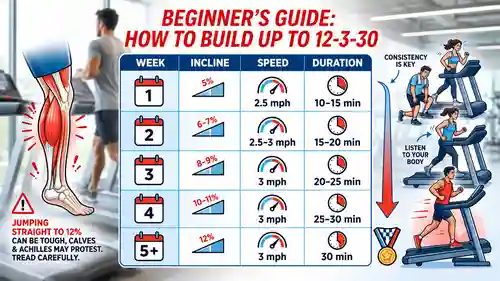
Jumping straight to 12% can be tough, and the calves and Achilles tendon often protest first. Here’s a gentler progression:
| Week | Incline | Speed | Duration |
|---|---|---|---|
| 1 | 5% | 2.5 mph | 10–15 min |
| 2 | 6–7% | 2.5–3 mph | 15–20 min |
| 3 | 8–9% | 3 mph | 20–25 min |
| 4 | 10–11% | 3 mph | 25–30 min |
| 5+ | 12% | 3 mph | 30 min |
Move to the next step only when the current one feels comfortable. If you’re feeling sharp pain, drop the incline.
How Often Should You Do It?
Most beginners do well with 3 to 4 sessions a week, with rest or lighter activity in between. As your fitness improves, you can go up to 5 days a week. Pair it with 2 days of strength training to build muscle and protect your joints.
Common Mistakes to Avoid
- Starting too steep, too fast. Build up gradually.
- Gripping the handrails. This reduces the benefit and can hurt your posture.
- Leaning forward too much. Stay tall with a slight forward lean from the ankles.
- Wearing worn-out shoes. Good cushioning and grip matter on an incline.
- Skipping the warm-up and cool-down. They reduce stiffness and injury risk.
- Relying on it alone. Walking is great, but strength training and nutrition matter just as much.
Who Should Be Careful?
The 12-3-30 workout is generally safe for healthy adults, but check with a doctor first if you:
- have heart or blood pressure problems
- have knee, ankle, hip or lower back issues
- are pregnant
- have been inactive for a long time or are recovering from an injury
Stop if you feel chest pain, dizziness or severe shortness of breath.
No Treadmill? Try These Alternatives
- Hill walking outdoors. Find a steady slope and walk up and down.
- Stair climber. It gives a similar glute and leg workout.
- Stair walking. Climb a few flights, then walk down slowly.
- Lower incline, longer time. Even 6–8% for 40 minutes is a solid workout.
Does 12-3-30 Really Work?
Yes, as long as you set realistic expectations. It’s a simple, effective way to raise your heart rate, strengthen your legs and build a daily movement habit. It isn’t magic, and results depend on consistency, diet, sleep and the rest of your lifestyle. Its real strength is that it’s easy to begin and easy to repeat.